Hospital-Grade Breast Pumps UK: What It Means & Your Options (2026)
If you've started researching a hospital grade breast pump UK mums talk about online, you've probably noticed the term gets thrown around a lot whilst rarely being explained. It sounds official and reassuring, but the truth is that "hospital-grade" has no single legal definition. It's a marketing and clinical shorthand, not a regulated category, which is exactly why so many mums end up confused about whether they truly need one, what to pay, or where to find affordable hospital grade breast pumps in this country.
I'm Olivia Bennett, an IBCLC based in London, and this guide is written to cut through the noise. We'll look at what the term genuinely means, when a hospital-grade pump is the right clinical choice, how to access one through the NHS, hire schemes or by buying, and where a quality everyday wearable fits in. My aim is simple: help you make a calm, informed decision rather than a panicked, expensive one.
What "Hospital-Grade" Actually Means (And What It Doesn't)
When people say "hospital-grade", they usually mean a stronger, more robust pump with a closed system (a hygienic barrier that prevents milk from entering the motor or tubing) that's safe to be shared between multiple users with their own individual kits. These are the large pumps you'll see on postnatal wards and in neonatal units.
The key features that earn a pump the "hospital-grade" label tend to be:
- A multi-user closed system — so the same motor can be safely shared between different mums, each with their own sterile collection set.
- Stronger, more consistent suction and cycling — designed to help establish a milk supply when a baby can't yet feed effectively at the breast.
- Durability for heavy, repeated use — built to run several times a day, every day, for weeks or months.
What "hospital-grade" does not automatically mean is "best for everyone" or "the most milk for every mum". Suction strength is only one part of effective expressing — comfort, fit, frequency and let-down matter enormously. A pump you find painful or inconvenient is a pump you'll use less, and frequency is what protects supply. That's an important reframe before you spend hundreds of pounds chasing a label.
When you genuinely may need a hospital-grade pump
There are real, clinical situations where a hospital-grade pump is the right tool and where I'd actively steer a mum towards one (ideally alongside support from a midwife or IBCLC):
- A premature or unwell baby who is in neonatal care and can't yet feed directly.
- Establishing supply from day one when baby isn't latching or feeding effectively, particularly in the early weeks.
- Genuine low supply being managed with professional support.
- Exclusively expressing for a baby who isn't breastfeeding at all.
In these cases, the goal is to build a supply that may not yet exist, and the stronger, hospital-grade option earns its place. If any of these apply to you, please speak to your midwife, health visitor or an IBCLC first — the right pump is only one piece of the picture.
When you most likely don't
For a great many mums, the day-to-day reality is different. You have an established supply, your baby feeds well, and you want to express to build a small freezer stash, cover the odd night out, return to work, or simply have a few hours of flexibility. In this "maintaining and expressing" scenario, a comfortable, convenient personal pump — and increasingly a hands-free wearable — is genuinely well suited, and often the one you'll reach for far more readily.
Hospital-Grade vs Personal Wearable: When Each Suits You
Rather than framing this as one being "better", it helps to match the tool to the job. Here's an honest comparison to help you decide which fits your situation, recognising that many mums end up using both at different stages.
| Consideration | Hospital-grade pump | Personal wearable pump (e.g. Relievoo PRO2) |
|---|---|---|
| Best for | Establishing supply, prems, low supply, exclusive expressing | Maintaining an established supply, day-to-day & back-to-work expressing |
| Suction strength | Typically very strong, multi-user rated | Strong for a wearable (up to 300 mmHg, 9 levels) for everyday use |
| Portability | Large, mains-powered, stays in one place | Cordless, in-bra, 230 g per cup — pump on the move |
| Hands-free | Usually no (needs flanges held or a hands-free bra) | Yes — sits discreetly inside your bra |
| Noise | Audible motor | Quiet (<35 dB) |
| How you access it | NHS loan, hospital-grade hire, or buy outright | Buy outright — typically the more affordable everyday option |
| Cost over time | Hire fees add up over months | One-off purchase you keep |
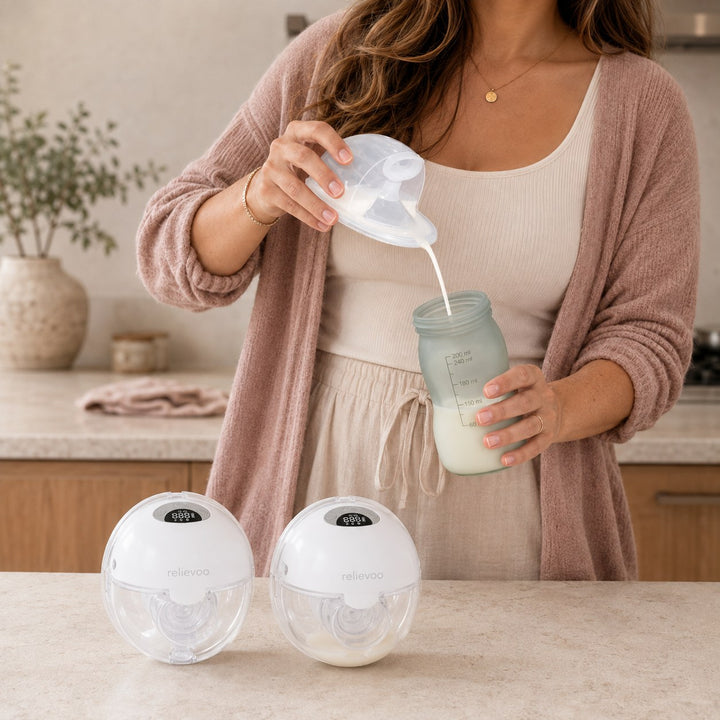
The honest takeaway: a wearable like the Relievoo Wearable Hands-Free Breast Pump PRO2 is not a substitute for a true hospital-grade pump in a clinical supply situation. But for the everyday expressing that most mums actually do, a quality wearable is often the more practical, more comfortable and more sustainable choice — and it's the one that ends up doing the work, because it's easy to use.
How to Access a Hospital-Grade Pump in the UK
There are three main routes, and which is right depends on your circumstances and how long you'll need it. Availability varies a great deal by area, so always check locally.
| Route | How it works | Good to know |
|---|---|---|
| NHS loan / ward use | Some hospitals and neonatal units provide a hospital-grade pump for use on the ward, or occasionally a short loan for medical need. | Provision is not universal and depends on your trust. Ask your midwife, neonatal team or infant feeding lead. This is the NHS breast pump route most mums mean. |
| Hospital-grade pump hire | You rent a pump (and buy your own collection kit) for a set period through a hire scheme. | The most flexible option for weeks-to-months use. Charged per week or month, so factor in how long you'll need it. |
| Buying outright | Purchase a personal or hospital-grade pump to keep. | Best value if you'll express for months. Personal wearables are usually the affordable everyday choice here. |
Starting points for help and hire
- Your midwife or health visitor — the first port of call, especially in the early days or if there's a medical need.
- The hospital infant feeding team or neonatal unit — for ward use, short loans, or local hire information.
- NCT and local breastfeeding support groups — many run peer support and can point you towards reputable local hire schemes.
- National Breastfeeding Helpline (0300 100 0212) — free, confidential support if you're unsure what you need.
A quick word on cost: hospital grade pump hire is sensible for a defined, shorter need, but the weekly fees add up. If you're going to be expressing for many months — back-to-work mums, this is often you — buying a pump you keep can work out far cheaper overall.
Affordable Everyday Alternatives: Where a Wearable Fits
This is where a lot of mums land once the early establishing phase is behind them. If your supply is settled and you mainly need convenient, comfortable expressing, an everyday wearable removes most of the friction — you can pump whilst doing the school run, answering emails or simply having a cup of tea with both hands free.
The Relievoo PRO2 wearable is built for exactly this everyday job. A few specs worth knowing:
- Double, cordless and in-bra — pump both sides hands-free, anywhere.
- 4 modes and 9 suction levels (up to 300 mmHg) so you can find a comfortable, effective rhythm.
- Quiet (<35 dB) and light at just 230 g per cup, holding 6 oz each.
- Up to 240 minutes of battery, recharging in about 90 minutes via USB-C.
- 24 mm shield plus 5 inserts (13, 15, 17, 19, 21 mm) so you can optimise your fit — which matters more for comfort and output than raw suction.
- CE, UKCA and BPA-free, made with food-grade silicone, backed by a Free Lifetime Warranty on the motor and a 30-Day Money-Back guarantee. Free UK shipping in 3–5 business days.
I always tell mums that fit is the quiet hero of comfortable expressing. A correctly sized flange or insert often does more for your comfort and output than chasing the strongest suction setting — so do take time to work through the included inserts.
Frequently Asked Questions
Is a hospital-grade breast pump better than a wearable?
Not universally — they're built for different jobs. A hospital-grade pump is the stronger, multi-user option for establishing supply, prems or low-supply situations. A wearable like the Relievoo PRO2 is designed for comfortable, convenient everyday expressing once your supply is established. For many mums maintaining a supply, a quality wearable is ideal; for clinical supply issues, speak to a midwife or IBCLC and consider hospital-grade hire.
Can I get a hospital-grade breast pump on the NHS?
Sometimes. Some hospitals and neonatal units provide hospital-grade pumps for ward use or short medical-need loans, but provision is not universal and varies by trust. The best step is to ask your midwife, health visitor or the hospital infant feeding team about what's available locally.
How much does hospital-grade pump hire cost in the UK?
Hire is usually charged per week or month and varies by provider and region, so check current rates locally. It's well suited to a defined, shorter-term need. If you expect to express for many months, buying a pump you keep often works out more affordable overall.
Do I really need a hospital-grade pump if I'm going back to work?
Usually not. If your supply is already established and your baby feeds well, returning-to-work expressing is exactly the maintenance scenario a personal wearable handles brilliantly — discreetly, hands-free and on the move. A hospital-grade pump is aimed at building supply rather than maintaining it.
What makes a pump "hospital-grade" if there's no legal definition?
It's an informal term, not a regulated category. In practice it refers to stronger, durable pumps with a multi-user closed system that can be safely shared between mums (each with their own kit) and are used or hired to establish supply. Always read the actual specifications rather than relying on the label alone.
Is the Relievoo PRO2 a hospital-grade pump?
No, and we wouldn't claim it is. It's a high-quality personal double wearable designed for comfortable everyday expressing and maintaining an established supply, with 9 suction levels up to 300 mmHg. If you have a clinical supply concern, please seek support from a midwife or IBCLC and consider hospital-grade hire alongside any everyday pump.