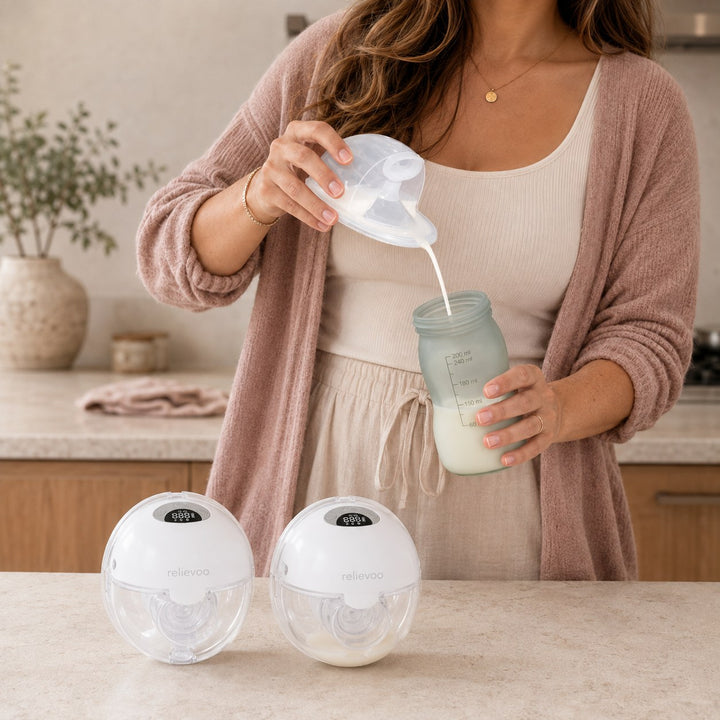
Breast Pump Flange Sizing Guide UK: How to Measure for the Perfect Fit
If pumping has felt uncomfortable, slow, or simply frustrating, the most likely culprit isn't your milk supply or your machine — it's your flange size. Getting the right breast pump flange size is one of the single most important things you can do to pump comfortably and efficiently, yet it's something almost no one explains properly. Whether you've heard people talk about an 18mm flange breast pump or a 24mm flange breast pump and wondered which is "normal", the honest answer is that there is no single normal — there's only what fits you.
In this guide I'll walk you through how to measure your breast pump flange at home, share a clear flange sizing chart for UK mums, and explain the signs that tell you your flange is too big or too small. I'll keep things practical and reassuring, because flange sizing isn't about getting it perfect on the first try — it's about understanding your own body and adjusting until pumping feels comfortable.
What is a breast pump flange, and why does flange size matter?
The flange (sometimes called a breast shield or, on wearable pumps, an insert) is the funnel-shaped part that sits against your breast and surrounds your nipple. When the pump creates suction, your nipple is gently drawn into the tunnel of the flange and back out again in a rhythm that mimics how a baby feeds. The right breast pump flange size lets your nipple move freely inside that tunnel without rubbing the sides and without pulling lots of areola in with it.
When the fit is correct, pumping should feel like a gentle tug — never pinching, burning, or sore. A flange that's the wrong size, on the other hand, can mean discomfort, less milk removed, and even sore or damaged nipples over time. That's why measuring matters far more than guessing.
It's the nipple that matters — not the breast
Here's the key thing many mums are never told: flange size is based on the diameter of your nipple, not the size of your breast or areola. Two mums with very different cup sizes can need the exact same flange. So when you measure, you're measuring the nipple itself — the part that goes into the tunnel — and ignoring the areola (the darker circle around it).
How to measure your breast pump flange size at home
You don't need anything fancy to work out your flange size. A simple ruler with millimetre markings, or a printable nipple ruler, will do. It's best to measure either just before a feed or pump, or shortly after, when your nipple is at its natural everted (sticking-out) state.
- Get comfortable and warm. Measure when your nipple is everted — gently stimulating it or measuring after a feed/pump makes this easier and more accurate.
- Measure the diameter, in millimetres. Place your ruler across the base of your nipple and measure straight across the widest point — from one side to the other. Measure only the nipple, not the areola around it.
- Don't include the areola. This is the most common mistake. The darker areola should not be drawn into the tunnel during pumping, so it shouldn't be part of your measurement.
- Add a few millimetres for your flange size. Your nipple needs a little room to move, so most guidance suggests adding roughly 2–4mm to your measured nipple diameter to find your starting flange or insert size.
- Measure both sides. It's completely normal for your two nipples to be slightly different sizes. If they are, you may need a different flange or insert on each side — one of the quiet advantages of a pump that comes with multiple inserts.
For example, if your nipple measures 16mm across, adding a few millimetres points you towards a 19mm flange or insert as a sensible starting point. Treat your first measurement as a starting estimate, then fine-tune based on how pumping actually feels.
Flange sizing chart for UK mums
Use the chart below as a starting guide. Measure your nipple diameter in millimetres, then look across to the suggested flange or insert size. Remember this is a guide, not a rule — comfort and good milk flow are the real tests, so be prepared to size up or down a little.
| Measured nipple diameter | Suggested flange / insert size |
|---|---|
| Around 10–11mm | 13mm |
| Around 12–13mm | 15mm |
| Around 14–15mm | 17mm |
| Around 16mm | 19mm |
| Around 17–18mm | 21mm |
| Around 20–21mm | 24mm |
| Larger than 24mm | 27mm / 28mm and above (available separately for some mums) |
You'll notice the popular 24mm flange that ships as the "standard" size on many breast pumps actually suits mums with a nipple diameter of around 20–21mm — which is larger than many people realise. That's exactly why so many mums find the default flange too big and benefit from a smaller insert. Equally, a smaller starting point like an 18mm flange breast pump set-up suits mums whose nipple measures in the mid-teens. And for mums who measure above 24mm, larger 27mm and 28mm sizes do exist and can be sourced separately.
Signs your flange is too big or too small
Numbers are a great starting point, but your body gives you the most reliable feedback. Here's what to look for once you start pumping.
Signs your flange is too big
- Large amounts of your areola are being pulled into the tunnel along with the nipple.
- You feel rubbing or friction, sometimes leaving the areola red or sore.
- The flange doesn't form a comfortable seal and you keep adjusting it.
- Milk flow feels slower than it should, despite good suction.
Signs your flange is too small
- Your nipple rubs painfully against the sides of the tunnel as it moves in and out.
- The very tip of your nipple turns white or blanches during or after pumping (a sign of restricted blood flow).
- You feel pinching or a tight, uncomfortable sensation.
- Your nipple can't move freely and appears squeezed rather than gently drawn.
What a good fit looks like
With the right size, your nipple moves freely in and out of the tunnel, only a small amount of areola (or none) is drawn in, pumping feels comfortable, and your breast feels well-drained afterwards. If you're between two sizes, it's often worth trying both — the more comfortable one is usually the winner.
How Relievoo's included inserts cover most mums
One reason flange sizing trips so many mums up is that most pumps arrive with a single, one-size-fits-all shield — usually 24mm — and nothing else. If that size doesn't suit you, you're left buying extras and waiting for them to arrive.
The Relievoo Wearable Hands-Free Breast Pump PRO2 takes a different approach. It's a double, cordless, in-bra wearable pump that comes with a 24mm shield plus five additional inserts — 13mm, 15mm, 17mm, 19mm and 21mm — so you can find your fit straight out of the box rather than ordering parts one at a time. Looking back at the sizing chart, that range covers the majority of UK mums, from petite nipple sizes right through to the larger end of the common spectrum.
Because the pump is fully hands-free and tucks discreetly inside your bra, it's also easy to test different inserts during everyday pumping until you settle on the size (or sizes) that feel best. And since the Relievoo PRO2 offers 4 modes and 9 suction levels (up to a maximum of 300 mmHg), you can pair the correct insert with a comfortable suction setting rather than cranking the suction up to compensate for a poor fit — which is a common reason pumping becomes uncomfortable in the first place. With CE and UKCA marking, BPA-free food-grade silicone, a Free Lifetime Warranty on the motor, a 30-Day Money-Back guarantee and free UK shipping, it's a reassuring place to start your flange-fitting journey. You can see the full size range and specs on the Relievoo PRO2 product page.
Frequently Asked Questions
How do I measure my breast pump flange size at home?
Use a millimetre ruler to measure the diameter of your nipple — straight across the widest point at its base — when it's everted, ideally just before or after a feed or pump. Measure the nipple only, not the areola, then add roughly 2–4mm to find a sensible starting flange or insert size. Measure both sides, as they can differ.
Is a 24mm flange too big for most mums?
A 24mm flange suits mums with a nipple diameter of around 20–21mm, which is larger than many people assume. Because 24mm is shipped as the "standard" on lots of pumps, plenty of mums find it too big and pump far more comfortably with a smaller insert such as 17mm or 19mm. If your areola is being pulled into the tunnel, you likely need a smaller size.
What's the difference between an 18mm and a 24mm flange breast pump?
The number refers to the diameter of the flange tunnel in millimetres. An 18mm flange breast pump set-up suits mums whose nipple measures in the mid-teens, whilst a 24mm flange breast pump suits larger nipple diameters around 20–21mm. Using a tunnel that's too wide or too narrow for your nipple is a frequent cause of discomfort and reduced output, which is why measuring matters.
Can my two breasts need different flange sizes?
Yes, and it's very common. Many mums find one nipple is slightly larger than the other and need a different insert on each side. This is one reason it helps to have a range of insert sizes available, so you can fit each breast individually rather than compromising.
How do I know if my flange fits correctly?
With a good fit, your nipple moves freely in and out of the tunnel, little or no areola is drawn in, pumping feels like a comfortable gentle tug rather than pinching or rubbing, and your breast feels well-drained afterwards. Any pain, blanching (whitening) of the nipple tip, or excessive areola being pulled in is a sign to try a different size.
What if my nipple is larger than 24mm?
Larger flange sizes such as 27mm and 28mm (and bigger) do exist for mums who need them, and can usually be sourced separately. If your measured nipple diameter is above 24mm, start there and adjust based on comfort — the same fit principles apply whatever your size.