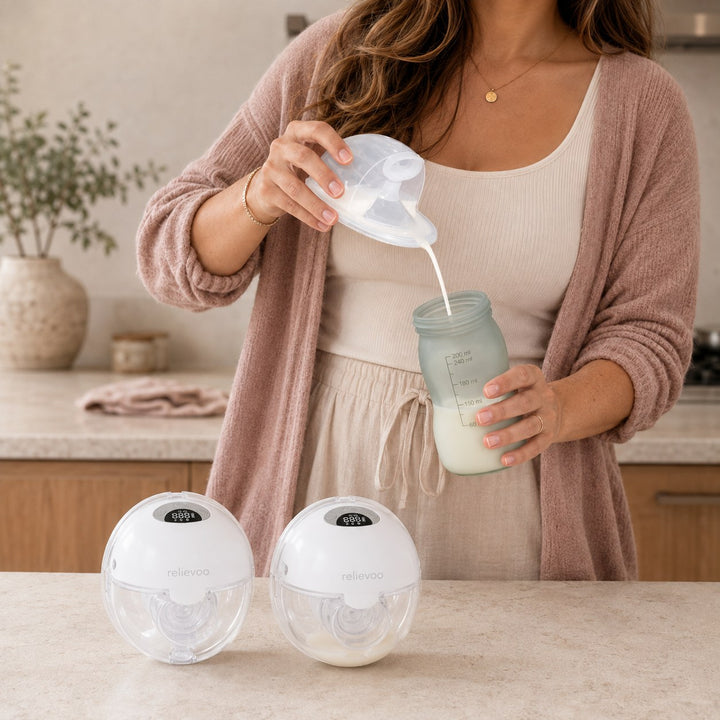
Exclusive pumping — feeding your baby breast milk entirely by bottle while pumping to maintain your supply — is a completely valid way to feed. Some moms choose it; others arrive here because of latch difficulties, a NICU stay or personal circumstances. Whatever brought you, the goal is the same: a schedule you can actually sustain. Here's how I coach exclusive pumpers through the first 12 weeks.
The golden rule: pump like a newborn feeds
In the early weeks, your body sets its long-term supply based on how often milk is removed. A newborn feeds 8-12 times a day, so exclusive pumpers should aim for a similar number of sessions — including at least one overnight session when prolactin levels are highest.
Weeks 1-4: establishing supply
- 8 sessions per day, roughly every 2.5-3 hours
- One session between midnight and 5 a.m.
- 15-20 minutes per session, or a few minutes past the last drops
Weeks 5-8: settling in
- Drop to 6-7 sessions if your supply is well established
- Keep the overnight session a little longer to protect supply
Weeks 9-12: finding sustainability
- Many moms move to 5-6 sessions and can drop the middle-of-the-night pump if supply holds
- Watch output for 3-4 days after any drop before reducing further
Make each session count
Being tethered to a wall outlet 6-8 times a day is exhausting. A cordless wearable pump lets you feed the baby, prep bottles or simply rest while you pump — which, realistically, is what keeps exclusive pumpers going.
Shop: TheRelievoo Wearable Breast Pump (Double) — pump while you parent — free USPS tracked shipping, 30-day money-back and a lifetime warranty. Independently lab-tested for quiet, comfortable use.
Two things dramatically affect output: flange fit and relaxation. A flange that's too big or too small reduces milk removal and causes soreness. If your nipple rubs the sides or a lot of areola is pulled in, try a smaller size from a set of flange inserts.
Storing your milk safely
Follow the CDC storage guidelines: room temperature up to 4 hours, refrigerator up to 4 days, and freezer up to 6-12 months (use the oldest first). Label everything with the date. Reusable silicone storage bags lay flat in the freezer and cut down on single-use waste. When it's time to feed, a cordless bottle warmer brings milk to a gentle temperature in about two minutes without a stovetop or microwave.
Protecting your mental health
Exclusive pumping is a real commitment. Give yourself permission to combo-feed with formula if you need to — fed is the goal. Lean on La Leche League USA and, if output drops suddenly or you feel overwhelmed, loop in your OB-GYN or an IBCLC.
Frequently asked questions
How long should each pumping session be?
About 15-20 minutes, or a couple of minutes past your last let-down.
When can I stop the overnight pump?
Usually once supply is well established, often around 8-12 weeks — but drop it gradually and watch your output.
How much milk should I be getting?
It varies widely. Total daily output matters more than any single session, and consistency is what protects it.
Build the schedule around your life, not a stranger's spreadsheet, and it will be far easier to keep going.
Written by Jessica Nolan, IBCLC — International Board Certified Lactation Consultant (Austin, Texas). Jessica is a mom of two who has supported 500+ American families with breastfeeding, pumping and the return-to-work transition. She is a member of the United States Lactation Consultant Association (USLCA) and works alongside local La Leche League USA groups.
Clinically reviewed by Dr. Rachel Adams, MD, FAAP (Austin, Texas). This article is educational and is not a substitute for advice from your OB-GYN, pediatrician or IBCLC.