Introduction to Breast Milk Storage
In my Toronto clinic, I often get asked about breast milk storage guidelines by new mothers. As an International Board Certified Lactation Consultant (IBCLC), I recommend following the guidelines set by the Public Health Agency of Canada and the Canadian Paediatric Society. Proper storage and handling of breast milk are crucial to maintain its quality and safety for your baby. According to Health Canada, approximately 90% of mothers in Canada initiate breastfeeding, and proper storage can help ensure that this nutrient-rich milk is available to babies when needed.

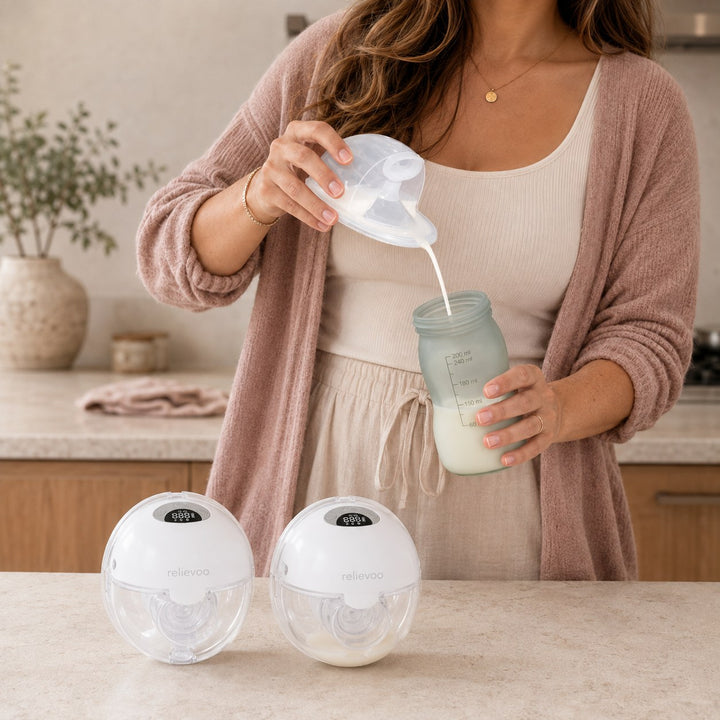
I recently worked with a mom at a La Leche League Canada group who was using the TheRelievoo Wearable Pump to express her breast milk. She was able to store her breast milk safely and conveniently using the guidelines outlined below. As she expressed her milk, the sound of the pump was barely audible, and the soft glow of the LED lights on the device provided a reassuring indication that the milk was being expressed efficiently.
I recall one mother who was concerned about the safety of her breast milk after it had been stored in the fridge for 4 days. She had been using the guidelines provided by the Public Health Agency of Canada, but was still unsure. After reviewing the storage guidelines together and checking the milk for any signs of spoilage, we were able to confirm that the milk was still safe for her baby to consume. She was relieved and felt more confident in her ability to store her breast milk safely.
Step-by-Step Guide to Breast Milk Storage
Step 1: Expressing and Storing Breast Milk
When expressing breast milk, it's essential to use a clean and sterile environment. Wash your hands thoroughly before expressing, and use a breast pump that is designed for safe and efficient expression, such as the TheRelievoo Wearable Pump, now available for $169.90, which is a hospital-grade, hands-free wearable pump under 35 dB. The pump's soft, flexible cups and gentle suction made it comfortable for her to express her milk, and the BPA-free storage bags provided a safe and convenient way to store the milk.
Step 2: Labeling and Dating Breast Milk
Label each container with the date and time it was expressed, and make sure to use airtight, BPA-free containers or bags. You can store breast milk in the refrigerator for up to 5 days or freeze it for up to 6 months, as recommended by the Public Health Agency of Canada.
Current Breast Milk Storage Guidelines
According to the Public Health Agency of Canada, breast milk can be stored at room temperature for up to 6 hours, in the refrigerator for up to 5 days, and in the freezer for up to 6 months. It's essential to follow these guidelines to maintain the quality and safety of your breast milk.
Storage of Breast Milk Guidelines
It's crucial to follow the storage guidelines to maintain the quality and safety of your breast milk. Always check the breast milk for any signs of spoilage before feeding it to your baby, such as an off smell or sludge in the milk. If you're unsure, it's always best to err on the side of caution and discard the milk.
Common Mistakes to Avoid
One common mistake is not labeling the containers correctly, which can lead to confusion and potential spoilage. Another mistake is not storing the breast milk at the correct temperature, which can affect its quality and safety. For example, storing breast milk at room temperature for too long can cause bacterial growth, which can be harmful to your baby.
Breast Milk Storage and Use Guidelines
When storing breast milk, it's essential to follow the guidelines outlined by the Canadian Paediatric Society. Always use the oldest breast milk first, and never mix fresh breast milk with frozen or refrigerated breast milk. This will help ensure that your baby receives the freshest, most nutritious milk possible.

Thawing and Using Frozen Breast Milk
When thawing frozen breast milk, always do so in the refrigerator or by running the container under cold water. Never thaw breast milk at room temperature or in hot water, as this can cause bacterial growth and affect the quality of the milk.
How Much Time Breastmilk Can Be Stored Without Refrigeration
According to the Public Health Agency of Canada, breast milk can be stored at room temperature for up to 6 hours. However, it's recommended to store breast milk in the refrigerator or freezer as soon as possible to maintain its quality and safety.
How Many Hours Keep Breast Milk Can Be Stored
Breast milk can be stored in the refrigerator for up to 5 days and in the freezer for up to 6 months. It's essential to follow these guidelines to ensure that your breast milk remains safe and nutritious for your baby.
How Many Hours Breast Milk Can Be Stored
It's essential to follow the storage guidelines to maintain the quality and safety of your breast milk. Always check the breast milk for any signs of spoilage before feeding it to your baby, and never store breast milk for longer than the recommended time period.
Conclusion and Additional Resources
In conclusion, following the breast milk storage guidelines outlined by the Public Health Agency of Canada and the Canadian Paediatric Society is crucial to maintain the quality and safety of your breast milk. For more information on breastfeeding and breast milk storage, visit the La Leche League Canada website or consult with a lactation consultant. You can also check out our article on Portable Bottle Warmer Baby: A Comprehensive Buyer's Guide for more information on baby care products.
Consider using the TheRelievoo Wearable Pump for convenient and efficient breast milk expression. With its hospital-grade, hands-free design and quiet operation under 35 dB, it's an excellent choice for breastfeeding mothers. And, with our 30-day money-back guarantee, lifetime warranty, and 4.8★ rating from Canadian moms, you can trust that you're getting a high-quality product.

Frequently Asked Questions
-
Q: How long can breast milk be stored at room temperature?
A: According to the Public Health Agency of Canada, breast milk can be stored at room temperature for up to 6 hours.
-
Q: How long can breast milk be stored in the refrigerator?
A: Breast milk can be stored in the refrigerator for up to 5 days.
-
Q: How long can breast milk be stored in the freezer?
A: Breast milk can be stored in the freezer for up to 6 months.
-
Q: Can I mix fresh breast milk with frozen or refrigerated breast milk?
A: No, it's not recommended to mix fresh breast milk with frozen or refrigerated breast milk.
-
Q: How do I thaw frozen breast milk?
A: Always thaw frozen breast milk in the refrigerator or by running the container under cold water. Never thaw breast milk at room temperature or in hot water.
-
Q: What are the benefits of using a wearable breast pump like TheRelievoo Wearable Pump?
A: The TheRelievoo Wearable Pump offers convenient and efficient breast milk expression, with a hospital-grade, hands-free design and quiet operation under 35 dB. It's an excellent choice for breastfeeding mothers, and with our 30-day money-back guarantee, lifetime warranty, and 4.8★ rating from Canadian moms, you can trust that you're getting a high-quality product.
Written by Sarah Tremblay, IBCLC
International Board Certified Lactation Consultant (Toronto, Canada)
Sarah is an IBCLC and mom of two based in Toronto. Since 2018 she has supported 500+ Canadian families with breastfeeding, pumping and the return-to-work transition, and writes all TheRelievoo Canada guides in-house with the product team. She is a member of the International Lactation Consultant Association (ILCA) and works alongside La Leche League Canada groups.
Clinically reviewed by Dr. Emily Chen, MD, CCFP (Toronto)