Introduction to Pumping at Work Laws in Texas
In my Austin practice, I've seen many moms struggle to balance work and breastfeeding, with 1 in 5 mothers returning to work within 3 months of giving birth, according to the CDC. However, with the right knowledge and support, you can successfully express milk at work. The CDC and American Academy of Pediatrics (AAP) recommend exclusive breastfeeding for the first six months, and pumping at work is a crucial part of this journey, with the AAP stating that breastfeeding can reduce the risk of Sudden Infant Death Syndrome (SIDS) by 72%.

Understanding Your Rights
Under the PUMP Act, employers with 50 or more employees are required to provide a private space for nursing mothers to express milk, which cannot be a bathroom and must be available for the duration of the time the employee is nursing, as stated in Section 7(r) of the Fair Labor Standards Act (FLSA). This means that you should have access to a clean, private, and comfortable space to express milk, with a chair, a table, and access to electricity.
Step-by-Step Guide to Pumping at Work
- Notify your employer: Inform your employer that you intend to express milk at work and ask about the company's lactation policy, which should be provided to you in writing, as required by the PUMP Act.
- Find a private space: Identify a private space where you can express milk, such as a lactation room or a designated area, which should be available to you whenever you need it, as stated in the PUMP Act.
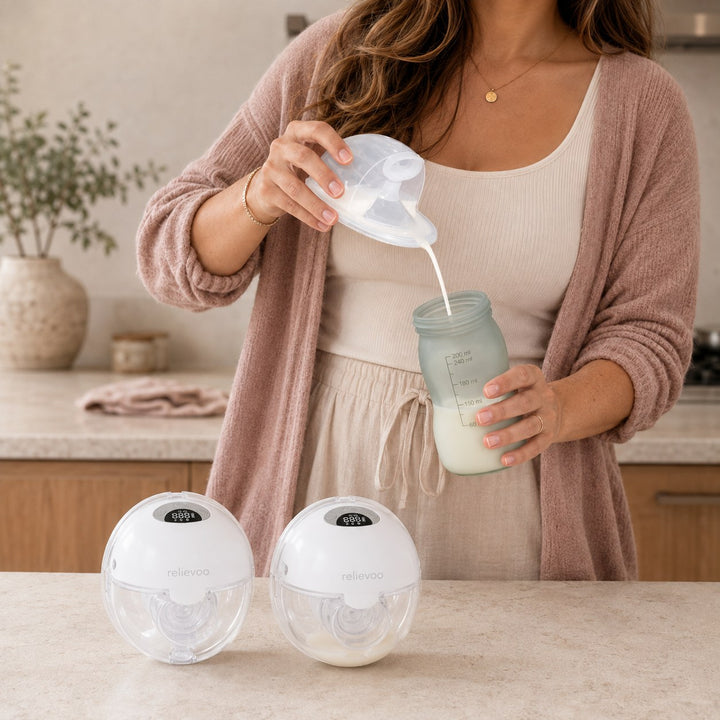
- Invest in a good pump: Consider investing in a Wearable Breast Pump (Double), which is a hospital-grade, hands-free wearable pump under 35 dB, available for $169.90, and has been lab-tested for safety and effectiveness.
- Store your milk: Label and date your expressed milk and store it in a refrigerator or insulated bag with ice packs, following the CDC's guidelines for safe storage and handling of breast milk.
- Take breaks: Take regular breaks to express milk, and remember that pumping at work does count as a break, with the average pumping session lasting around 15-20 minutes, according to the AAP.
Common Mistakes to Avoid
A mom I worked with last month at a La Leche League USA meeting made the mistake of not notifying her employer about her intention to express milk at work, which led to a lack of accommodation and made it difficult for her to continue breastfeeding. As she recalled,
I was trying to pump in a crowded break room, with my coworkers walking by and staring at me. It was so uncomfortable and stressful, and I ended up having to stop breastfeeding earlier than I wanted to. If only I had known my rights and communicated with my employer, things might have been different.Don't make the same mistake – know your rights and communicate with your employer, and remember that you have the right to express milk at work, as stated in the PUMP Act.

Additional Resources
For more information on breastfeeding and pumping at work, visit the WIC Breastfeeding Support (USDA) website or check out our blog post on A Cheaper Alternative to Elvie: TheRelievoo Wearable Breast Pump. You can also contact the CDC or the American Academy of Pediatrics (AAP) for more information and support, and remember that you can also reach out to your local La Leche League USA chapter for breastfeeding support and guidance.
Breast Pump Options
When it comes to choosing a breast pump, there are many options available, including Elvie NZ alternatives like TheRelievoo Wearable Breast Pump. Consider factors such as price, quality, and customer support when making your decision, and remember to look for lab-tested pumps that meet your needs and budget, with the average cost of a breast pump ranging from $50 to $300, according to the USDA.
Conclusion
Pumping at work can be challenging, but with the right knowledge and support, you can successfully express milk and continue breastfeeding. Remember to know your rights, communicate with your employer, and invest in a good pump, such as the Wearable Breast Pump (Double), available for $169.90 with free USPS tracked delivery across the US, 30-day money-back, and lifetime warranty. With the right support and resources, you can overcome any obstacles and achieve your breastfeeding goals, and provide your baby with the best possible start in life, as recommended by the CDC and the AAP.

Frequently Asked Questions
Here are some frequently asked questions about pumping at work laws in Texas:
-
Q: Does pumping at work count as a break?
A: Yes, pumping at work does count as a break, as stated in the PUMP Act, and you should be allowed to take regular breaks to express milk, with the frequency and duration of breaks determined by your individual needs and your employer's policies. -
Q: How often should I pump at work?
A: You should pump at work every 2-3 hours, or as needed, to maintain your milk supply and prevent engorgement, according to the AAP, and you should also be aware of the CDC's guidelines for expressing and storing breast milk. -
Q: Can my employer deny me a private space to pump?
A: No, under the PUMP Act, employers with 50 or more employees are required to provide a private space for nursing mothers to express milk, which cannot be a bathroom and must be available for the duration of the time the employee is nursing, as stated in Section 7(r) of the FLSA. -
Q: How long can I store my expressed milk?
A: You can store your expressed milk in a refrigerator for up to 5 days, or in a freezer for up to 6 months, according to the CDC's guidelines for safe storage and handling of breast milk. -
Q: Can I use a pacifier to help my baby transition to a bottle?
A: Yes, you can use a pacifier to help your baby transition to a bottle, but be sure to introduce it at the right time and in the right way, as recommended by the AAP, and remember to always prioritize breastfeeding and avoid giving your baby a pacifier until they are at least 3-4 weeks old and have established a good breastfeeding routine. -
Q: What are some other resources available to help me with breastfeeding and pumping at work?
A: There are many resources available, including the CDC, American Academy of Pediatrics (AAP), and La Leche League USA, as well as your local WIC office and other breastfeeding support organizations, and remember to always reach out to your healthcare provider or a lactation consultant if you have any questions or concerns about breastfeeding or pumping at work.
Written by Jessica Nolan, IBCLC
International Board Certified Lactation Consultant (Austin, Texas)
Jessica is an IBCLC and mom of two based in Austin, Texas. Since 2018 she has supported 500+ American families with breastfeeding, pumping and the return-to-work transition, and writes all TheRelievoo USA guides in-house with the product team. She is a member of the United States Lactation Consultant Association (USLCA) and works alongside local La Leche League USA groups.
Clinically reviewed by Dr. Rachel Adams, MD, FAAP (Austin, Texas)